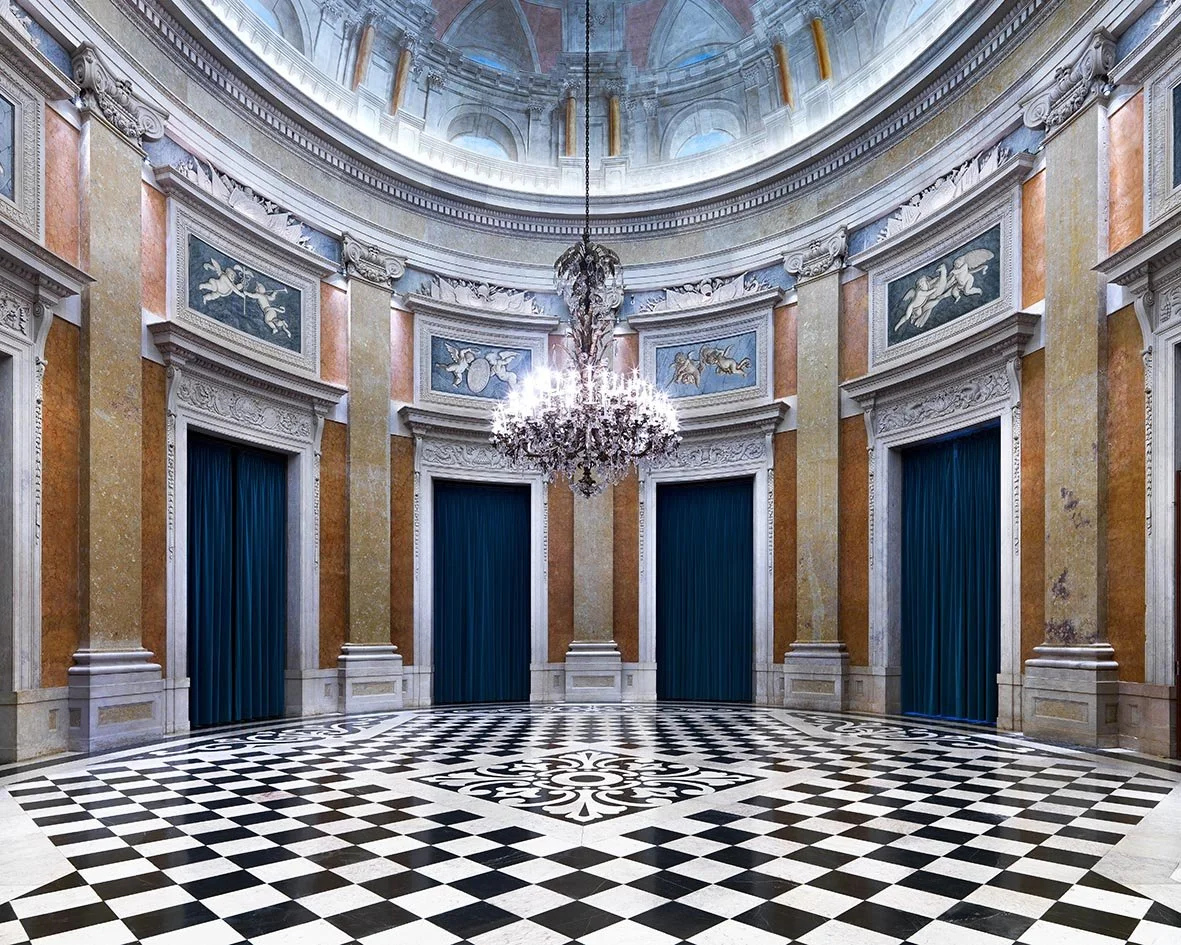
Massimo Listri, a Florentine photographer born in 1953, has spent decades photographing historic libraries, palaces, museums and collections across Europe. Part of this work is collected in the books published by Taschen, including The World's Most Beautiful Libraries. Looking at his images side by side, three choices stand out, repeated with great consistency.
Always in the centre
Listri almost always stands on the axis of the room, using central perspective, as in Renaissance painting or Baroque stage design. The verticals are perfectly straight. The room is seen as its designer drew it, without the distortion of a wide-angle lens pointed at a slant that is typical of so much commercial photography.
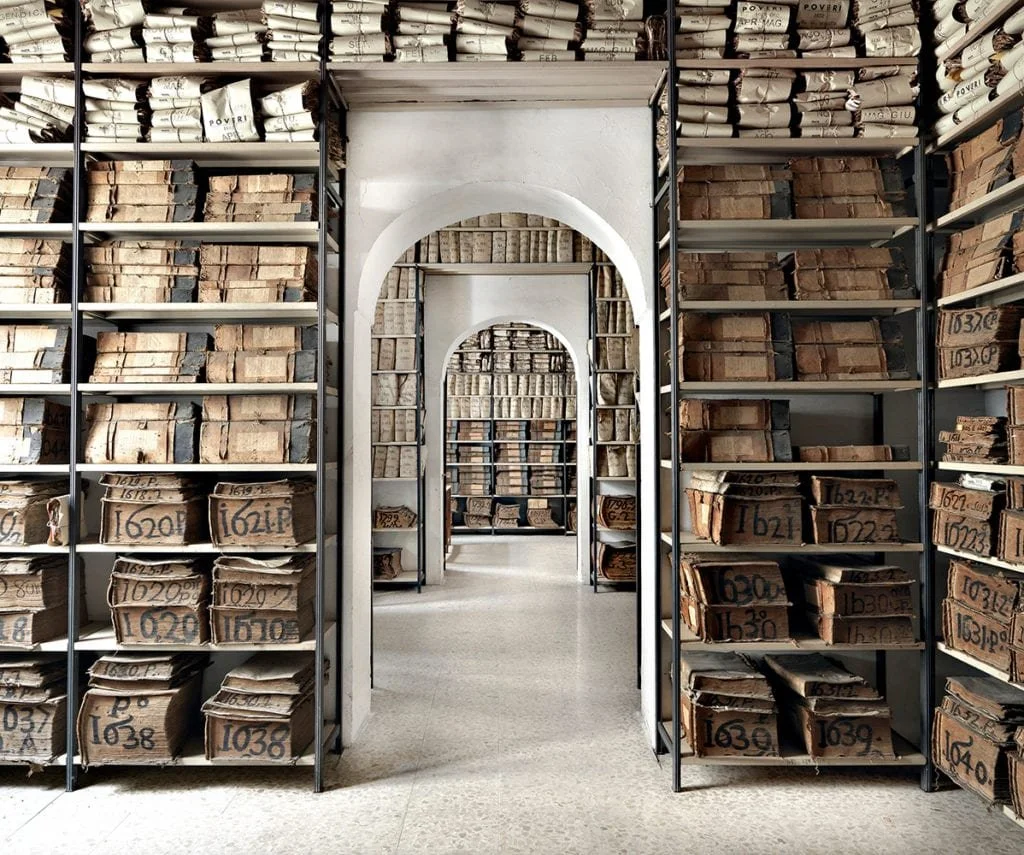
No people
There is nobody in his rooms: no attendants, no visitors, not even a shadow. It is a consistent choice. A human figure would become the subject and the room would turn into a backdrop. Without people, what remains is the architecture and what the centuries have left behind: the chairs of the palaces, the full shelves of monastic libraries, the corridors of museums.
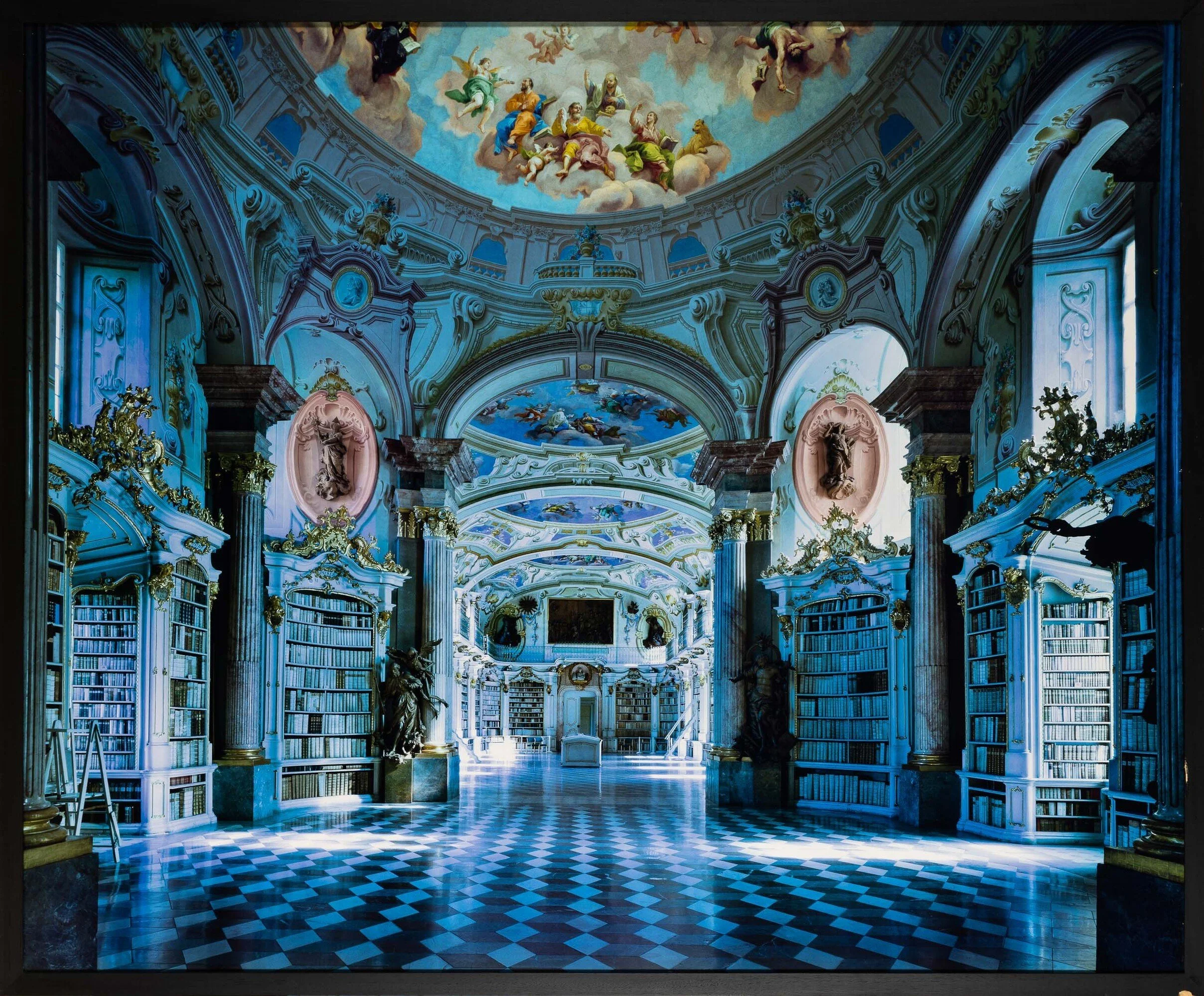
Natural light only
Listri brings no lamps or extra lights to brighten the dark corners. He works with the light coming in through windows and skylights, and this lets him show materials as they are: polished marble, the small cracks in the stucco, the grain of old wood.
What I take into my own work
I work mainly on contemporary architecture, but I apply two of these choices myself: straight verticals and, whenever possible, no added lights, because the lighting design is part of the project. People, on the other hand, are sometimes needed, especially in hotels, to show how a space is lived in.
In the portfolio you'll find the Brixen Public Library by Carlana Mezzalira Pentimalli, a contemporary project I photographed.
